
Recently, I had the pleasure of welcoming Jessica and Katie from Park Padel to ICON Padel Club in Miami for a friendly strategic session. We exchanged ideas, shared experiences, and explored opportunities to improve programming, streamline operations, and support the club’s next stage of growth.
I’ve consulted with Park Padel since its inception. I helped develop its first San Francisco facility and build the programming and operational infrastructure at Embarcadero and Oyster Point. I also trained and certified coaches at both locations through Padel Smash Academy.
Park Padel at a glance
Park Padel operates three Northern California clubs. Embarcadero draws on walkable access for residents, office workers, and visitors. Oyster Point can serve employees in South San Francisco’s biotech hub, while West Sacramento illustrates how introductory clinics and social play can build demand. The common thread is matching each location’s programming to the people it serves.
What the founders built
I’m so proud of the work Jessica, Neil, and Katie have done. They came to padel as newcomers to the business and learned how to build and operate clubs along the way. Seeing them grow Park Padel into a profitable padel business with three locations has been especially rewarding.
Embarcadero and the advantage of walkability
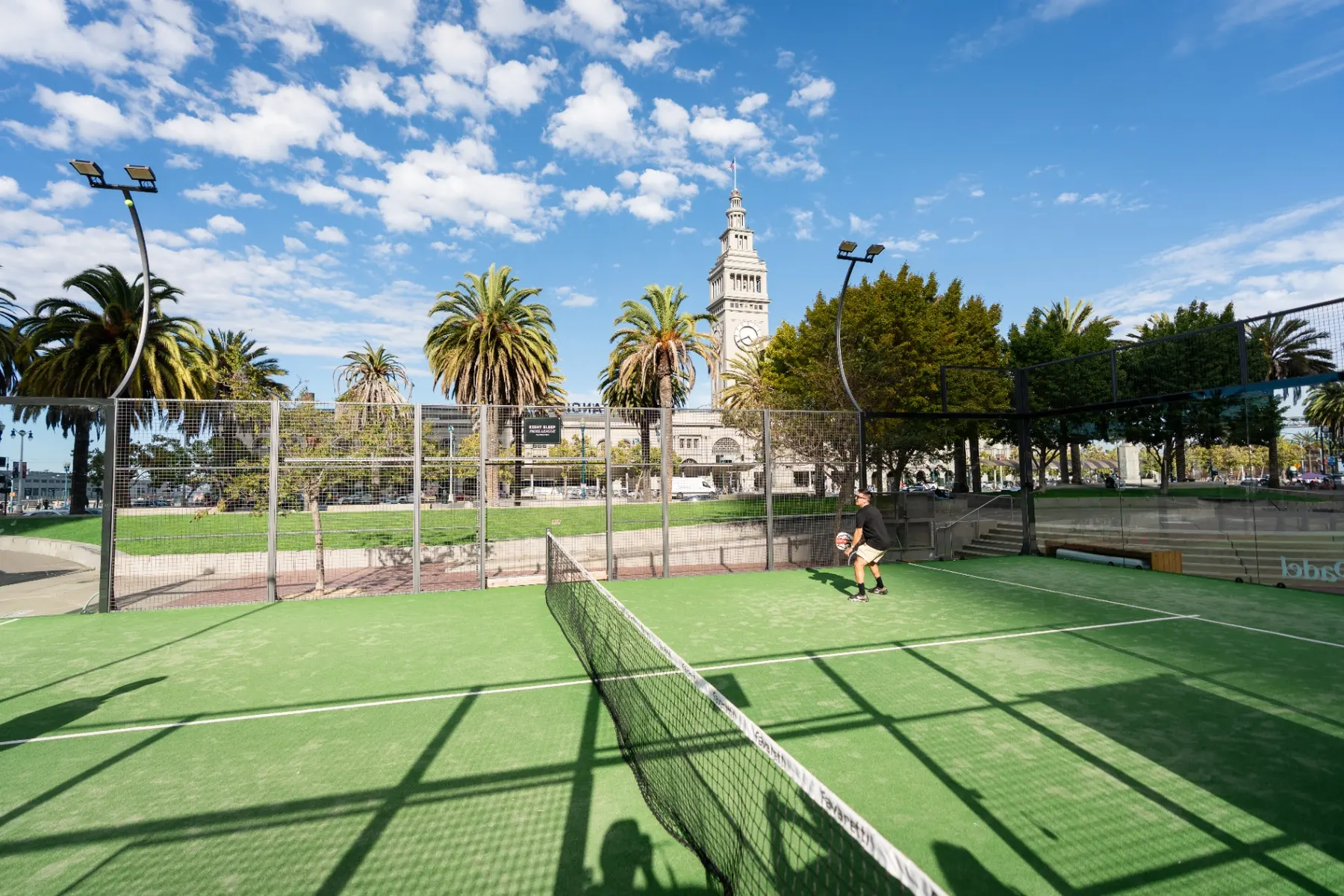
Embarcadero has three outdoor courts in a prime spot on the San Francisco waterfront, where nearby residents, office workers, and tourists give the club tremendous visibility. People can walk over from home, squeeze in a match at lunch, or discover padel on their way to the Ferry Building. The site has limited amenities, and players use restrooms in nearby 4 Embarcadero Center. For many players, the convenience of walking to the courts outweighs the limited amenities. Court utilization rose in the latest quarter, with Embarcadero leading the way. Nearly 70% of its available court time was booked during peak hours, a strong result for any hospitality business.
Oyster Point and the biotech workday
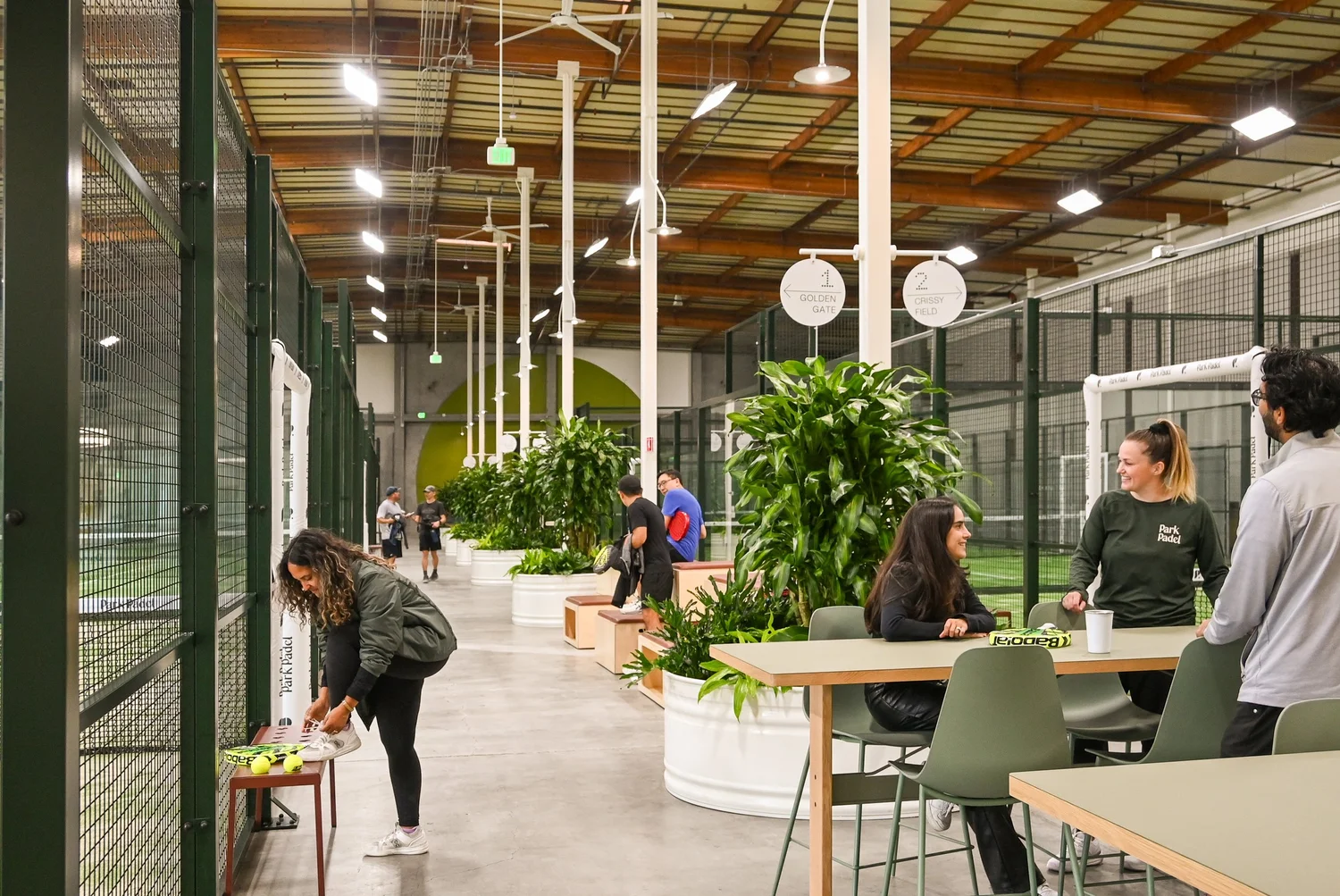
Oyster Point has six indoor courts in the heart of South San Francisco’s biotech hub. Nearby employers can offer padel as a perk close to the office, whether through subsidized court time, beginner clinics, or team outings. That proximity makes it easier for employees to play during lunch or after work and gives the club a way to build repeat participation through employer partnerships.
Building demand in West Sacramento
West Sacramento’s four outdoor courts sit along the riverfront in the Bridge District. In a market where more people may be discovering padel, introductory clinics and social sessions can give first-time players an easy way to start and a group to come back to.
The bottom line is simple. Location and convenience beat amenities.
How I evaluate a padel club location
Before signing a lease, I look at how many people in the area already play, how easily they can reach the facility, and whether the local market can support the proposed pricing. I also consider competing court supply and the time it will take to develop a regular playing community.
A lower rent can be attractive on paper. The financial model should also account for the coaching hours, marketing, and introductory programs needed to build demand. In a higher-rent location, I want to see how convenience and repeat play could support the economics over time.
Coaching gives players a reason to return
A well-trained coach can help a beginner enjoy a first session, find players at a similar level, and understand what to work on next. Clubs can support that progression with introductory clinics, level-based groups, organized matches, and competitive training. When each program gives players a clear next step, the schedule helps build a community around the courts.
What to measure alongside court utilization
I track revenue per available court hour, program fill rates, repeat visits, membership renewals, and operating margin. Together, those measures help an operator decide where to add coaching hours, how to use quieter court time, and which programs create value after staffing and other operating costs.
Location creates the opportunity. Coaching develops the players. Programming builds the community. Disciplined operations help make the business profitable.
https://parkpadel.com/clubs

For club owners and operators
The Complete Padel Club Blueprint
A comprehensive operating manual provided to consulting clients—covering pre-opening, launch, daily operations, programming, and scalable growth.
Work with PSA and Julian